Kitchen Automation Tools for Indian Restaurants: Streamline Operations

Indian restaurants often face unique challenges like managing multi-dish orders, balancing staff workload during peak hours, and minimizing order errors. These issues can slow down service and impact customer satisfaction. By adopting kitchen automation tools tailored for Indian cuisine, restaurant owners can significantly enhance order accuracy, speed up food preparation, and optimize kitchen workflows for smoother operations.
Quick answer: Kitchen automation tools for Indian restaurants streamline order processing, reduce errors, and speed up food preparation by integrating order management software, kitchen display systems, and automated workflow solutions. These technologies help balance kitchen workload during peak hours and improve overall staff productivity without compromising quality.
What Are Kitchen Automation Tools for Indian Restaurants?
Kitchen automation tools combine software and hardware designed to manage complex kitchen operations efficiently. For Indian restaurants, these tools address specific challenges such as handling multi-dish orders with varying spice levels and customization requests, which are common in Indian cuisine.
Software components include restaurant order management software India that digitizes incoming orders and integrates with the point-of-sale (POS) system.
Hardware components often feature kitchen display systems (KDS) that present clear, real-time order details to kitchen staff, eliminating miscommunication.
Automation helps streamline order processing, manage kitchen workflows, and coordinate dish preparation timings.
Integration with popular Indian POS systems ensures seamless data exchange and reduces manual entry errors.
For example, a Mumbai-based Indian restaurant reported a 30% reduction in order errors after implementing a kitchen display system integrated with their existing POS. This improvement translated into faster service and higher customer satisfaction.
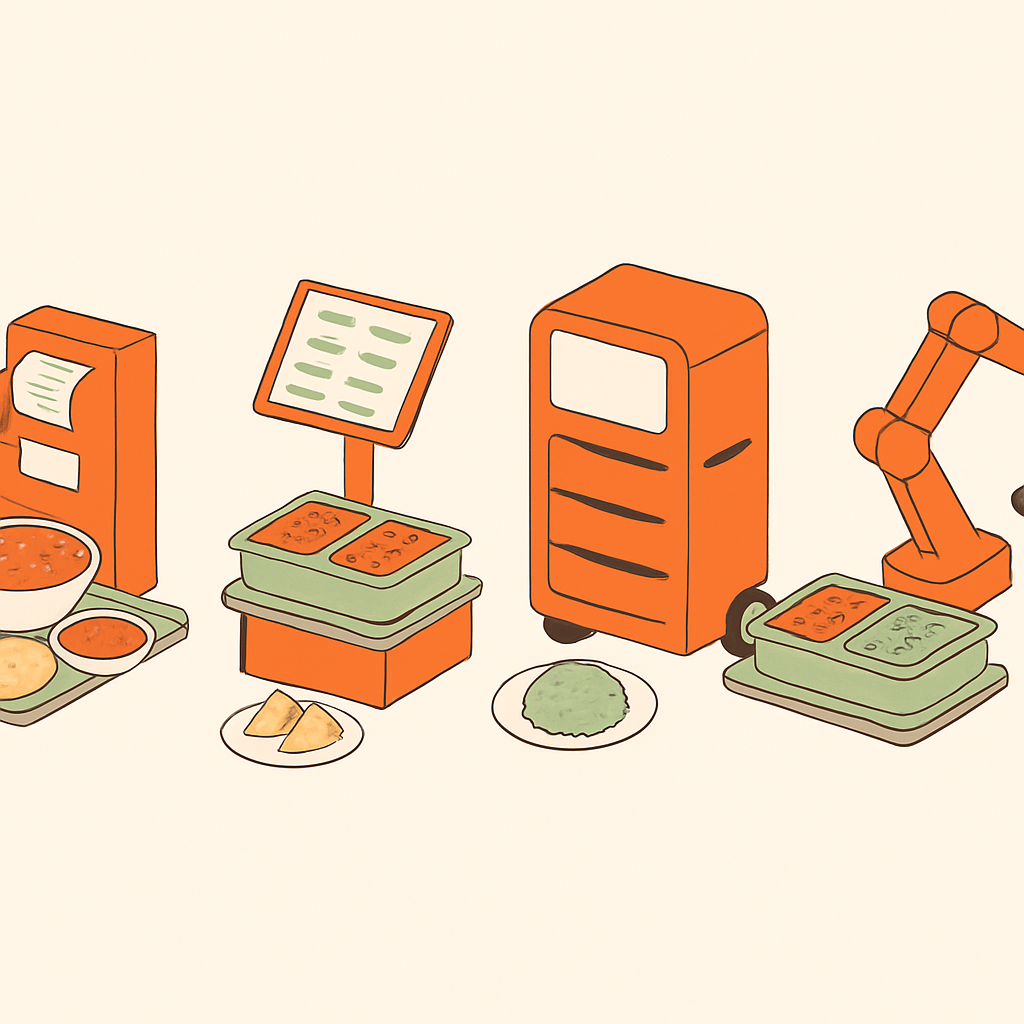
Diagram comparing features of top kitchen automation tools for Indian multi-dish orders
Reducing Order Errors in Indian Kitchens with Automated Order Processing
Order errors in Indian kitchens frequently arise from manual entry mistakes, language barriers between front-of-house and kitchen staff, and the complexity of multi-dish orders with specific customizations. Automation addresses these challenges effectively.
Digitization of orders via restaurant order management software India eliminates handwriting errors and misinterpretations.
Kitchen display systems provide a digital ticket that clearly communicates each order’s details, including spice levels and add-ons, directly to the kitchen staff.
Real-time updates and error alerts enable immediate corrections if an order is modified or canceled.
A case study from a busy Mumbai restaurant showed a 40% reduction in order errors after deploying an automated kitchen workflow solution. This improvement helped reduce food waste and improved kitchen staff productivity by minimizing rework.
Best Tools for Managing Multi-Dish Orders in Busy Indian Kitchens
Handling simultaneous multi-dish orders is a hallmark of Indian restaurant kitchens. Choosing the right kitchen automation tools can simplify this complexity.
Multi-dish order management systems allow the kitchen to track each dish’s preparation status independently.
Customization options enable staff to input spice levels, dietary restrictions, and combo meals accurately.
Order tracking features provide visibility on preparation times and sequence, helping coordinate dishes with different cooking durations.
Below is a comparison of three leading kitchen automation tools popular among Indian restaurants:
ToolMulti-Dish ManagementPOS IntegrationCustomizationsPopular Use CaseBiteOrderAdvancedSeamless with Indian POSExtensive (spice levels, combos)Cloud kitchens, dine-inKitchen Display System AModerateLimitedBasic customizationsSmall restaurantsAutomated Workflow Solution BAdvancedGoodModerateMulti-outlet chains
These tools help kitchens prepare diverse dishes simultaneously, improving efficiency and reducing customer wait times by up to 15% during peak hours.
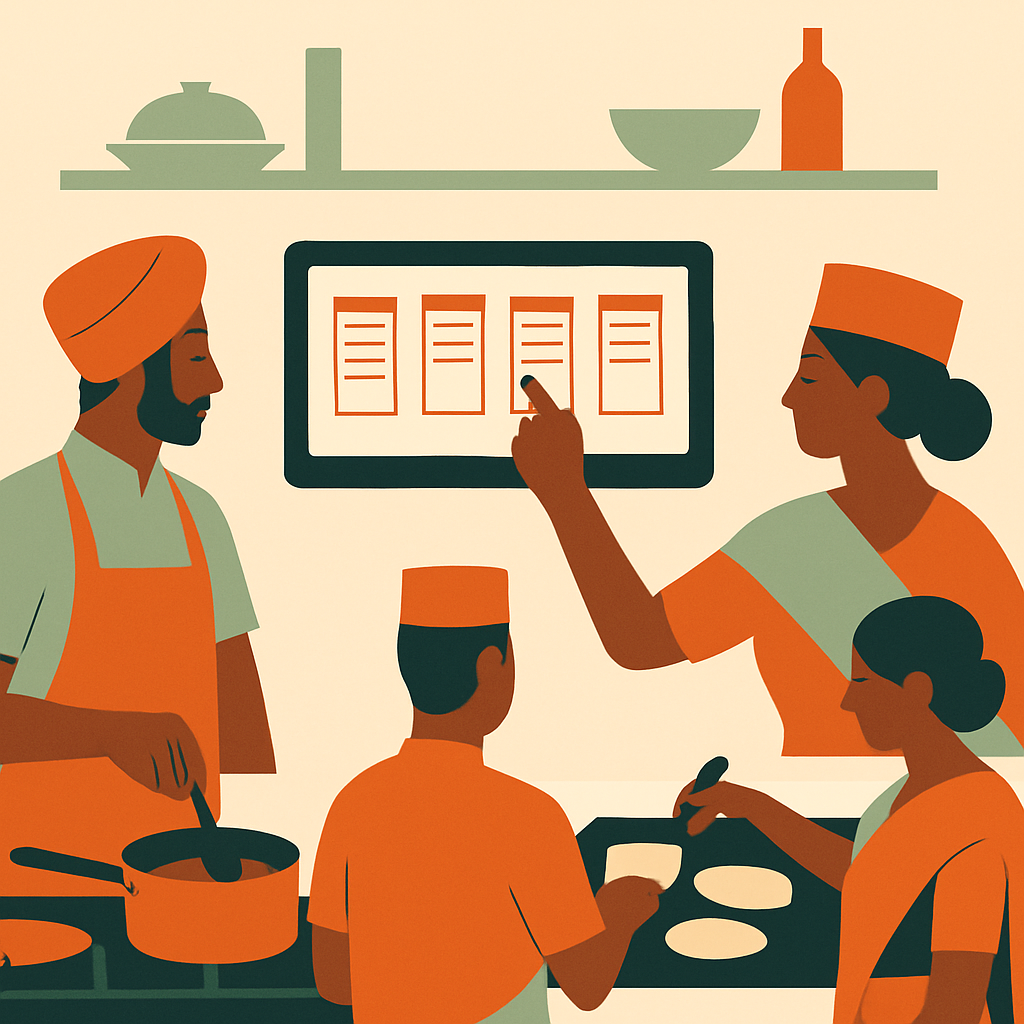
Kitchen staff using kitchen display system during peak hour in Indian restaurant
Balancing Kitchen Workload During Peak Hours Using Technology
Peak hour kitchen management is particularly challenging for Indian restaurants due to the volume and complexity of orders. Automation plays a critical role in workload balancing.
Task assignment features distribute cooking tasks evenly among available staff.
Progress tracking monitors real-time order status, allowing managers to reallocate resources as needed.
Kitchen display systems prioritize orders based on preparation time and customer wait time.
For instance, a Delhi restaurant utilizing automated workflow solutions reduced peak hour delays by 25%, leading to smoother service and less staff burnout.
Integrating Kitchen Automation in Indian Restaurants: Step-by-Step
Implementing kitchen automation requires a structured approach to ensure successful adoption.
Assess current kitchen operations to identify bottlenecks such as order errors or staff overload.
Select automation tools compatible with your existing POS and order management software.
Conduct staff training to familiarize kitchen and service teams with new workflows and devices.
Deploy in phases starting with a pilot during off-peak hours to gather feedback.
Iterate improvements based on real-time data and staff input over the next 2-3 months.
A typical mid-sized Indian restaurant can complete this phased integration within three months, minimizing disruption while maximizing benefits.
Can Automation Speed Up Food Preparation Without Compromising Quality?
Many Indian restaurant owners worry that speeding up food preparation might affect the authenticity and quality of dishes. However, automation enhances efficiency without sacrificing standards.
Better coordination through kitchen display systems ensures dishes are prepared in sync, reducing wait times and overcooking.
Standardized recipes and portion controls embedded in software maintain consistency across orders.
Real-time monitoring alerts staff to any delays or deviations in cooking processes, enabling prompt corrections.
Data from a Chennai restaurant showed a 20% reduction in preparation time after implementing automation, with customer satisfaction scores remaining steady, demonstrating quality retention alongside speed.
Restaurant Kitchen Automation Benefits Specific to Indian Cuisine
Indian restaurants gain distinct advantages from kitchen automation tailored to their operational needs:
Improved order accuracy reduces food wastage and enhances customer trust.
Enhanced staff productivity through balanced workloads and clear communication.
Faster service increases table turnover, driving higher revenue during peak periods.
Efficient handling of complex menu items and customization requests without confusion.
A recent survey found that 85% of Indian restaurant owners reported measurable benefits within six months of adopting kitchen automation, highlighting its value in the Indian food service industry.
Frequently Asked Questions
How can automation reduce order errors in Indian restaurants?
Automation digitizes order entry and uses kitchen display systems to clearly communicate orders, minimizing human errors common in manual processes.
What are the best tools for managing multi-dish orders in busy kitchens?
Tools that offer multi-dish order management, real-time tracking, and POS integration like BiteOrder and advanced kitchen display systems are ideal.
How to balance kitchen workload during peak hours using technology?
Automated task assignment and progress tracking help distribute workload evenly, ensuring smooth operations even during rush periods.
What steps are involved in integrating kitchen automation in Indian restaurants?
Steps include assessing needs, selecting compatible tools, training staff, and iterative testing to ensure smooth adoption.
Can automation speed up food preparation without compromising quality?
Yes, by improving coordination and standardizing processes, automation speeds up prep while maintaining authentic taste and quality.
How does kitchen display system help Indian restaurant operations?
It improves order accuracy, prioritizes tasks, and provides real-time updates to kitchen staff, reducing errors and delays.
What are common challenges in Indian restaurant kitchens and how can automation solve them?
Challenges include complex orders, manual errors, and peak hour workload; automation streamlines workflows and enhances communication.
For Indian restaurant owners looking to streamline kitchen operations and improve order accuracy, exploring solutions like BiteOrder can provide an integrated platform combining order management, kitchen display systems, and workflow automation—all tailored to the unique demands of Indian cuisine.


