WhatsApp Business API vs App for Cafes: India’s Best Choice

Managing customer orders via WhatsApp has become essential for cafes in India, but choosing between WhatsApp Business API and the WhatsApp Business App can be confusing. Each platform offers unique features, costs, and scalability options that affect your cafe’s daily operations and growth potential. This guide breaks down the key differences and helps you decide the best WhatsApp solution for your cafe’s order management and customer experience.
Quick answer: For Indian cafes handling moderate to high order volumes, WhatsApp Business API offers scalable automation and integration benefits, ideal for growth and efficiency. Small cafes with limited order volume and simpler needs often find the WhatsApp Business App more cost-effective and easier to set up. Choosing the right platform depends on your cafe’s size, order volume, and long-term goals.
What is WhatsApp Business API vs WhatsApp Business App for Cafes in India?
Understanding the distinction between WhatsApp Business API and the WhatsApp Business App is crucial for Indian cafe owners aiming to optimize customer order management.
WhatsApp Business App is a free mobile application tailored for small businesses, allowing cafes to manage chats, send automated greetings, and handle basic order taking manually.
WhatsApp Business API is a paid, enterprise-grade solution designed for scalability. It enables automation through chatbots, integration with Customer Relationship Management (CRM) and Point of Sale (POS) systems, and supports handling large order volumes efficiently.
While the App requires minimal setup and no coding, the API demands technical configuration, business verification, and approval from WhatsApp.
Both platforms facilitate direct communication with customers, but their functionality and scalability differ significantly.
For example, a Mumbai-based cafe managing up to 30 daily orders relies on the WhatsApp Business App to manually confirm and process orders. In contrast, a Bangalore cloud kitchen handling over 200 daily orders uses the WhatsApp Business API integrated with its POS system to automate order flows and reduce manual errors.
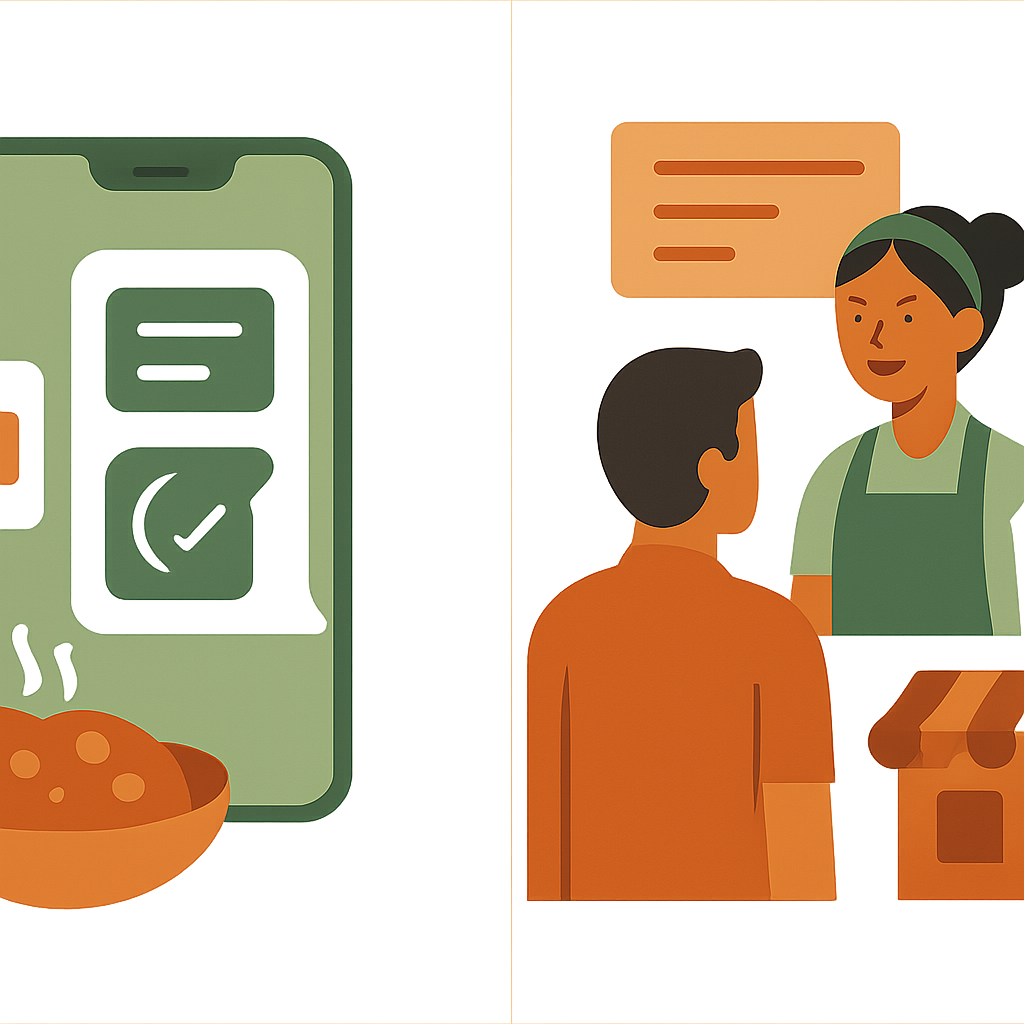
Infographic comparing WhatsApp Business API and App features for Indian cafes
Comparing WhatsApp Business API Cost India vs WhatsApp Business App Features for Cafes
Cost and feature considerations play a pivotal role in selecting the right WhatsApp platform for cafés across India.
WhatsApp Business App is free to download and use, offering basic features such as automated greetings, quick replies, and labels to organize chats.
WhatsApp Business API involves multiple costs: initial setup fees, monthly charges, and per-message fees regulated by WhatsApp and influenced by Indian telecom policies.
The API supports advanced functionalities like chatbots for instant responses, multi-agent support allowing several staff members to handle chats simultaneously, and seamless integration with ordering and delivery management systems.
Small cafes benefit from the zero cost and simplicity of the App, while growing cafes find the API's efficiency gains justify the investment despite the higher upfront and ongoing expenses.
For instance, an Indian cafe owner in Pune reported saving over 3 hours daily after switching to API-based automation, paying around ₹10,000 monthly in fees. This contrasts with the WhatsApp Business App’s zero cost but time-intensive manual processing.
Order Volume Handling and Scalability: WhatsApp Business API Benefits for Cafes
Order volume and scalability are critical factors in choosing a WhatsApp solution that aligns with your cafe’s growth trajectory.
The WhatsApp Business App suits cafes with low daily order volumes due to its messaging limits and manual order management.
The API can handle thousands of messages daily by automating responses, order confirmations, and updates, reducing errors and delays.
Multi-agent access in the API is essential for cafes expanding delivery or takeaway services, enabling multiple staff to manage orders concurrently.
Adopting the API early ensures smooth scalability, eliminating the need to switch platforms as order volumes grow.
A Delhi cafe expanded its daily orders from 50 to 300 after adopting the API, integrating orders directly into their kitchen display system. This integration streamlined workflows and sped up order processing.
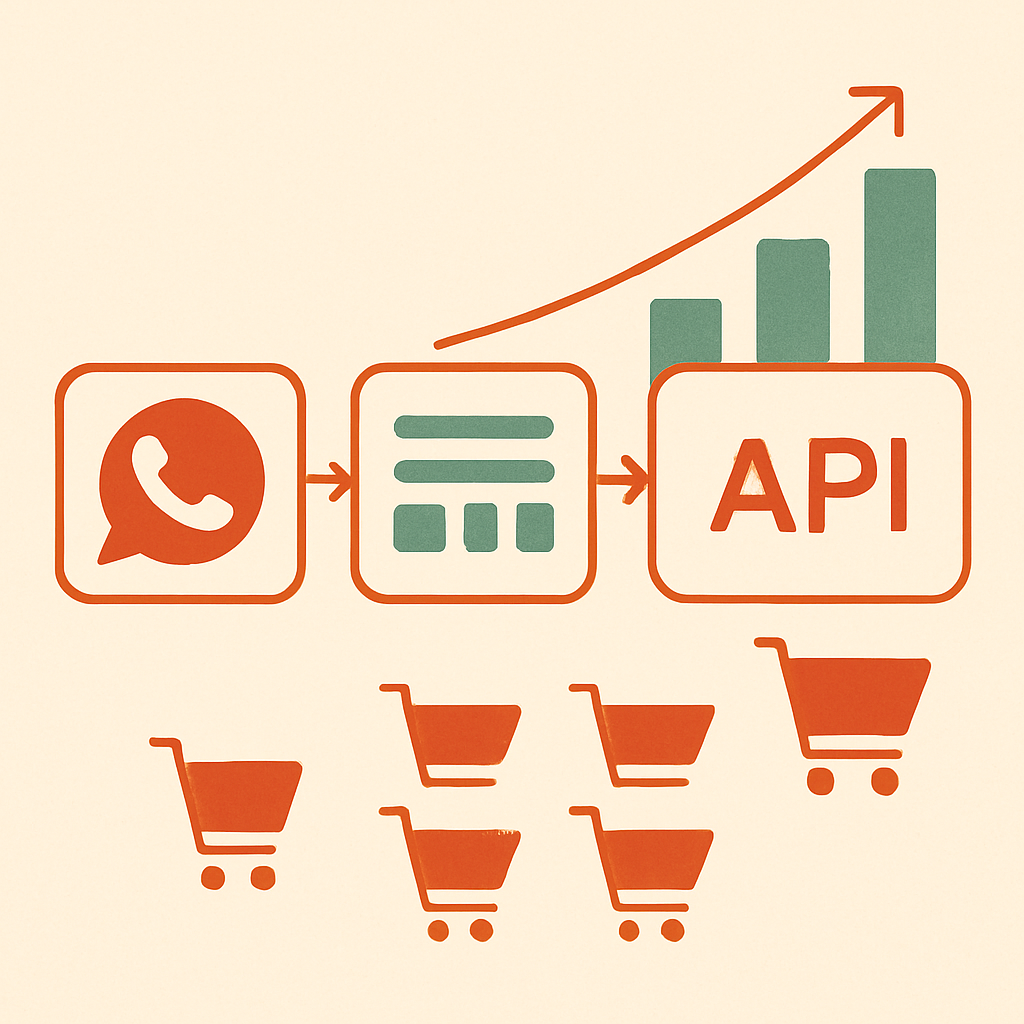
Flowchart showing order volume growth and scalability from WhatsApp Business App to API
Customer Experience WhatsApp: How API and App Differ for Indian Cafe Orders
The customer experience via WhatsApp significantly impacts repeat business and brand reputation for cafes.
WhatsApp Business App offers a personalized, manual chat experience but can suffer from slower response times during peak hours due to limited staff handling.
The API delivers instant automated replies, order confirmations, and real-time tracking updates, enhancing transparency and customer satisfaction.
API supports rich messaging templates that include images, buttons, and quick reply options, making interactions more engaging.
Improved customer experience via the API often leads to increased repeat orders and positive online reviews.
For example, a Pune cafe observed a 20% increase in repeat customers after implementing API-driven automated order confirmations and tracking messages.
Setup Requirements and Limitations: WhatsApp Business API vs App for Indian Cafes
Setup complexity and platform limitations are important when considering operational readiness and time-to-market.
The WhatsApp Business App requires simple smartphone installation with minimal configuration, making it accessible to cafes without technical expertise.
The API demands business verification through Facebook Business Manager, technical integration with existing systems, and often involves third-party providers or developers.
The App is limited to a single device and lacks multi-agent support, restricting simultaneous customer handling.
API setup timelines vary from weeks to months depending on the cafe’s technical readiness and the complexity of integrations.
A Hyderabad cafe owner experienced delays during API setup but ultimately gained significant operational efficiencies and improved customer service once the system was fully integrated.
Hidden Costs and Long-Term ROI: WhatsApp Business API Cost India Explained
Beyond upfront fees, understanding hidden costs and potential return on investment (ROI) is critical for Indian cafes evaluating WhatsApp Business API.
API-related costs include message fees charged per session, setup and onboarding charges, and possible third-party platform subscription fees if using SaaS providers.
Technical maintenance, periodic updates, and integration tweaks also incur indirect costs over time.
The WhatsApp Business App has no direct monetary costs but may generate indirect expenses through increased labor hours and slower order processing.
Long-term ROI favors the API for cafes with growing order volumes, as automation reduces labor costs and increases order handling capacity.
A Chennai restaurant calculated that the API’s monthly costs were offset within six months due to labor savings and a 30% increase in order capacity, boosting overall revenue.
Checklist: Best WhatsApp Platform for Cafe Orders in India
Use this checklist to determine which WhatsApp platform aligns best with your cafe’s needs:
Assess your daily order volume and projected growth over the next 12 months.
Consider your budget for messaging fees, setup, and ongoing costs.
Evaluate your technical capability or access to developers for API integration.
Prioritize customer experience improvements and the need for automation to reduce manual workload.
Decide if you require multi-agent access and integration with existing POS or CRM systems.
A Jaipur cafe owner used a similar checklist to start with the WhatsApp Business App and successfully upgraded to the API after one year of steady growth.
Frequently Asked Questions
What are the main differences between WhatsApp Business API and WhatsApp Business App for cafes?
The API is scalable and supports automation and integration with other systems, ideal for handling large order volumes. The App is simple, free, and suitable for manual order management in small cafes.
Which WhatsApp platform is more cost-effective for small cafes in India?
The WhatsApp Business App is more cost-effective for small cafes with low order volumes due to zero setup or messaging fees.
Can WhatsApp Business API handle high order volumes better than the App?
Yes, the API is designed to manage large volumes with automation, multi-agent support, and integration capabilities, reducing errors and delays.
How does customer experience differ between WhatsApp Business API and App?
The API offers faster, automated responses, rich messaging templates, and real-time order updates. The App relies on manual communication, which can slow down responses during peak hours.
Is WhatsApp Business API scalable for growing cafes?
Yes, the API supports growth by handling increased messages, enabling multiple users, and integrating with order management systems.
What are the setup requirements for WhatsApp Business API compared to the App?
The API requires business verification, technical integration, and sometimes third-party assistance. The App only needs a simple smartphone installation.
Are there any hidden costs associated with WhatsApp Business API for cafes?
Yes, including per-message fees, setup and maintenance costs, and potential charges from third-party SaaS providers managing the API integration.
For Indian cafe owners seeking a seamless WhatsApp ordering system that balances cost, scalability, and customer experience, exploring solutions like BiteOrder can simplify API integration and optimize order management without heavy technical overhead.