Automated Food Delivery Dispatch: Cut Indian Restaurant Delivery Times

Indian restaurants often struggle with long food delivery times due to traffic congestion, inefficient dispatch, and complex urban infrastructure. These delays not only frustrate customers but also increase order cancellations and reduce profitability. By adopting automated food delivery dispatch and route optimization tailored for Indian cities like Mumbai and Bangalore, restaurants can dramatically cut delivery times and boost customer satisfaction.
Quick answer: Indian restaurants can reduce food delivery time by implementing automated food delivery dispatch systems combined with real-time route optimization software designed for Indian urban challenges. These technologies streamline order assignment and delivery route planning, minimizing delays caused by traffic and manual errors.
What Is Automated Food Delivery Dispatch and How Does It Work?
Automated food delivery dispatch is a technology-driven system that assigns delivery orders to the most suitable delivery personnel based on real-time data such as location, availability, and delivery priority. Unlike traditional manual assignment, it eliminates human errors and reduces dispatch delays, which are critical in managing high order volumes common in Indian restaurants.
Automated dispatch software integrates with your restaurant's Point of Sale (POS) and kitchen display systems, ensuring smooth order flow from preparation to delivery.
Real-time updates enable dynamic reassignment of orders if delivery conditions change, such as sudden traffic jams or delivery personnel unavailability.
For Indian cities like Mumbai and Bangalore, the system adapts to handle unique challenges such as unpredictable traffic congestion and dense delivery zones.
For example, a Mumbai-based cloud kitchen reported a 30% reduction in average dispatch time after integrating an automated order dispatch system linked directly with their POS. This improvement translated into faster deliveries and higher customer satisfaction.
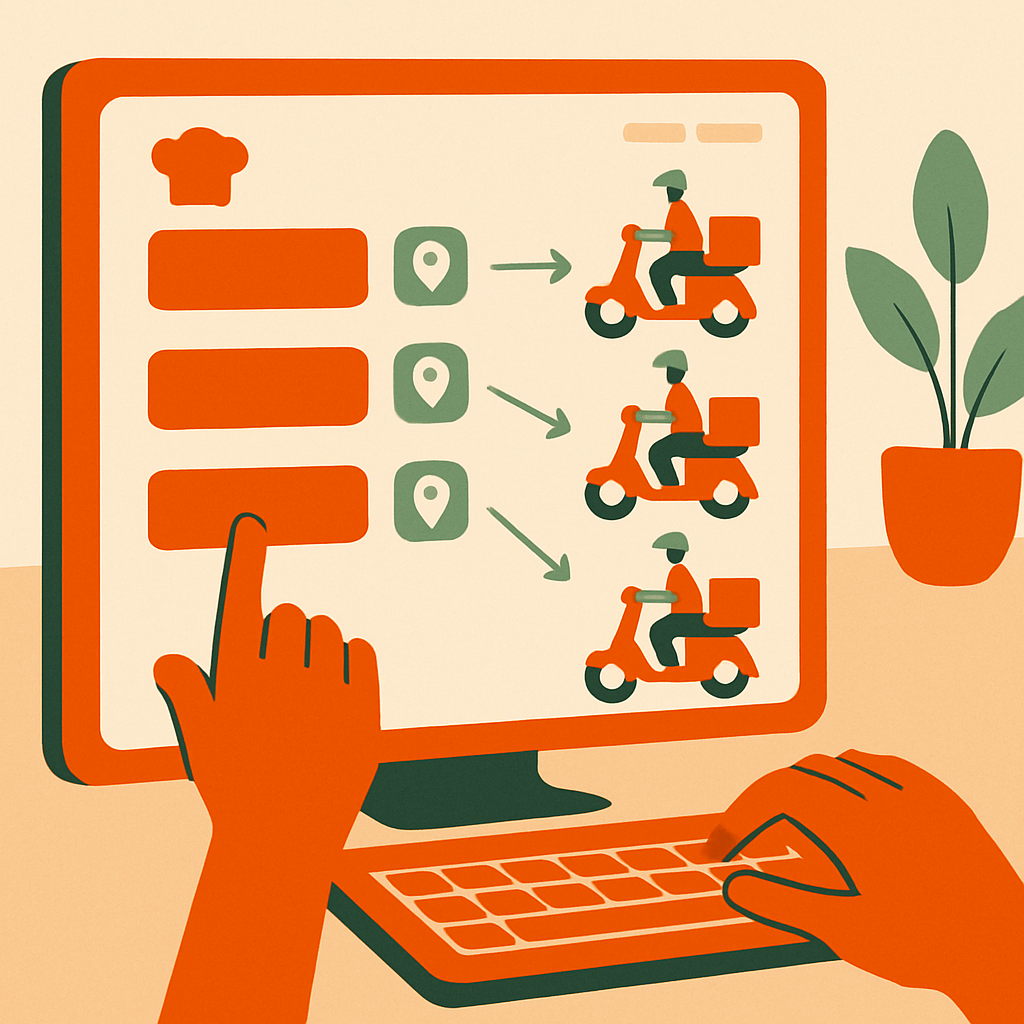
Automated dispatch dashboard assigning orders to delivery personnel in real time for Indian restaurant
Route Optimization for Indian Restaurants: Improving Delivery Efficiency
Route optimization software calculates the fastest and most efficient delivery paths, which is especially vital in Indian metros plagued by erratic traffic and narrow streets.
It factors in traffic congestion patterns typical to cities like Bangalore and Mumbai, including peak hour delays and known bottlenecks.
When handling multiple orders, it sequences deliveries to minimize total travel time, helping delivery personnel cover more orders efficiently.
Dynamic rerouting capabilities allow the system to adjust routes in real time if obstacles such as roadblocks or sudden jams arise.
Optimized routes reduce fuel expenses and help delivery staff avoid fatigue, improving overall service reliability.
Localization is key: mapping data tailored to Indian urban layouts with narrow lanes and last mile delivery considerations enhances effectiveness.
A Bangalore restaurant using delivery route planning software experienced a 25% reduction in average delivery time during peak hours, directly impacting order fulfillment rates positively.
Common Food Delivery Challenges in Indian Cities and How Automation Helps
Indian urban environments present several obstacles for food delivery operations.
Heavy traffic congestion: Causes unpredictable delays that disrupt delivery schedules.
Limited delivery infrastructure: Narrow lanes and congested neighborhoods complicate navigation.
High order volumes: Lead to dispatch bottlenecks and overwhelm manual assignment processes.
Order cancellations: Often result from late deliveries, damaging restaurant reputation.
Manual dispatch errors: Without real-time tracking, it's hard to monitor and adjust deliveries promptly.
According to survey data, 40% of Indian restaurant owners cite traffic delays as the primary cause of late deliveries. Automated dispatch systems mitigate these issues by optimizing order assignments and enabling real-time monitoring.
How to Automate Order Dispatch for Faster Deliveries in Indian Restaurants
Implementing automated order dispatch involves strategic steps tailored to Indian restaurant operations:
Select a dispatch management system compatible with your delivery fleet size and workflows — whether you operate a cloud kitchen or a multi-outlet restaurant.
Integrate the system with your existing POS and kitchen display systems to ensure seamless order flow and avoid double handling.
Set delivery priorities based on factors such as order type (hot meals vs. snacks), customer location, and delivery personnel availability.
Train staff to monitor dispatch dashboards and adjust parameters based on daily traffic trends or unexpected events.
Leverage analytics from the system to identify inefficiencies and continuously improve dispatch speed.
One Indian cloud kitchen saw its average order-to-dispatch time drop from 12 minutes to just 5 minutes post-automation, significantly enhancing delivery speed.
Checklist: Selecting Delivery Route Planning Software for Indian Restaurants
Choosing the right route optimization tool is crucial. Here's what to look for:
Supports real-time traffic data for major Indian metros and tier-2 cities like Pune and Hyderabad.
Allows multi-order route optimization focusing on last mile delivery challenges common in Indian urban areas.
Seamlessly integrates with your existing restaurant SaaS technology and dispatch management systems.
Offers mobile applications for delivery personnel with live tracking and communication features.
Provides analytics and reporting tailored to challenges such as traffic congestion India and delivery time reduction.
For instance, a comparative analysis of the top three delivery route planning tools used by Indian restaurants revealed pricing between ₹5,000-₹15,000 per month and highlighted features like offline map access and customizable route preferences.
Technology’s Role in Reducing Order Cancellations Due to Late Delivery
Late deliveries lead to cancellations that hurt a restaurant's bottom line and reputation. Automated dispatch and route optimization technologies play a critical role in reducing these incidents:
Faster dispatch and optimized routes minimize delivery time variability, reducing late arrivals.
Real-time tracking enables proactive communication with customers, setting accurate expectations.
Automated alerts help restaurants allocate more delivery personnel during peak hours to handle surges.
Reliable delivery builds customer trust, increasing repeat orders and positive reviews.
Data analytics identify bottlenecks such as specific routes or times causing delays, allowing targeted improvements.
A Delhi restaurant reported a 15% drop in order cancellations after adopting real-time route optimization combined with automated dispatch, improving customer satisfaction scores noticeably.
Optimizing Delivery Routes in Mumbai and Bangalore: Best Practices for Indian Restaurants
Both Mumbai and Bangalore present distinct delivery challenges influenced by their urban dynamics.
Account for peak traffic hours: Mumbai’s morning and evening rush hours differ from Bangalore’s IT corridor congestion patterns; scheduling dispatch accordingly saves time.
Leverage local shortcuts: Experienced delivery personnel know hidden lanes and delivery hotspots that software can incorporate for better routing.
Use delivery fleet management tools: Balance workloads across zones to prevent overburdening certain areas and ensure timely deliveries.
Incorporate last mile delivery strategies: Micro-fulfillment centers closer to high-demand areas reduce distance and time.
Continuously update routes: Adjust plans based on seasonal events like Ganesh Chaturthi processions in Mumbai or monsoon-related road closures.
For example, a Mumbai restaurant used delivery route planning software to navigate monsoon-induced traffic disruptions effectively, reducing delays by 20% during the rainy season.
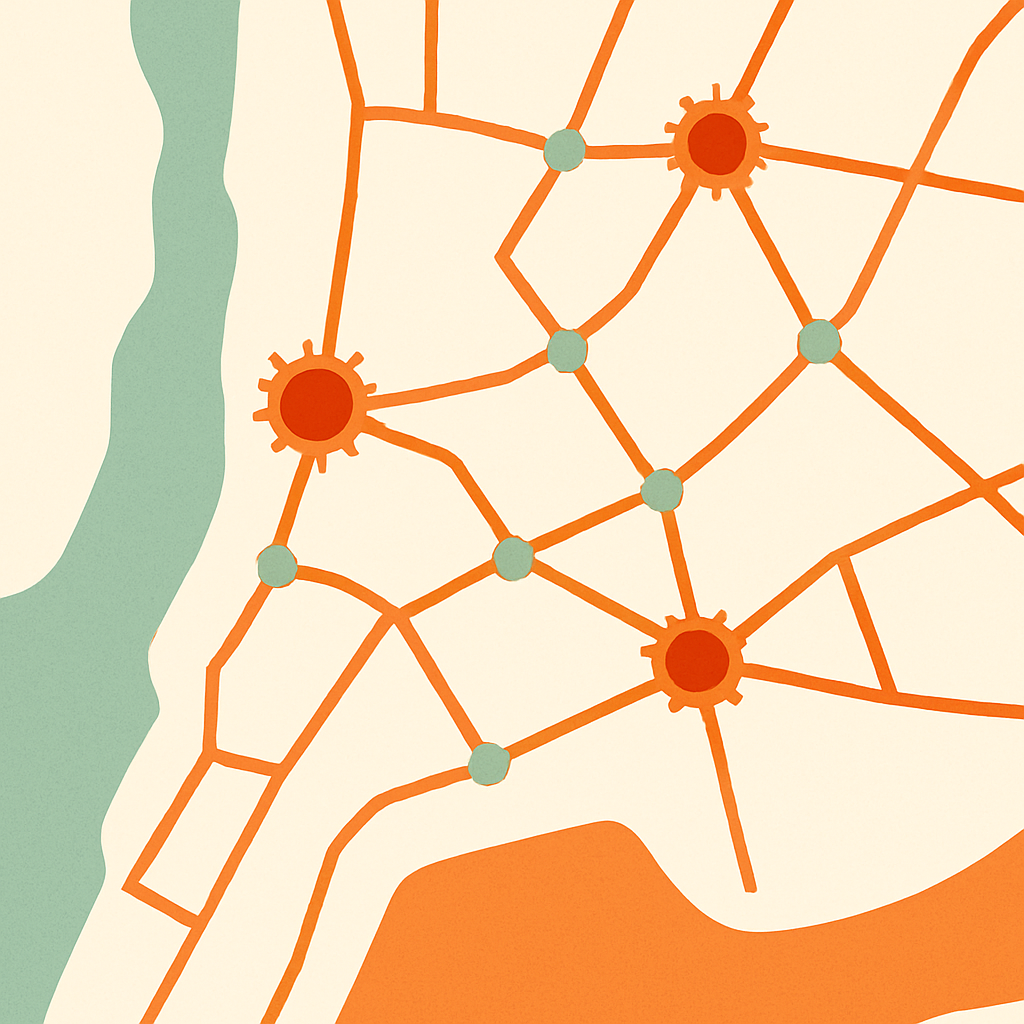
Map showing optimized delivery routes with traffic hotspots in Mumbai or Bangalore for food delivery
Frequently Asked Questions
How can Indian restaurants reduce food delivery time?
By implementing automated order dispatch systems combined with route optimization software that accounts for local traffic and delivery patterns.
What is automated dispatch in food delivery?
It is a technology-driven process that automatically assigns delivery orders to the best-suited delivery personnel based on real-time data.
How does route optimization improve delivery efficiency?
It calculates the fastest and most efficient delivery routes, reducing travel time and delays, especially important in congested Indian cities.
Which software helps optimize delivery routes in Indian cities?
Delivery route planning software with real-time traffic integration and multi-order optimization, tailored for Indian urban infrastructure.
What are common delivery challenges faced by Indian restaurants?
Traffic congestion, narrow lanes, high order volume, manual dispatch errors, and lack of real-time tracking.
How to automate order dispatch for faster deliveries?
By integrating a dispatch management system with your POS, setting delivery priorities, and using real-time data for dynamic order assignment.
Can technology reduce order cancellations due to late delivery?
Yes, by enabling faster dispatch, optimized routing, and real-time customer updates, technology reduces delays and cancellations.
For Indian restaurant owners looking to seamlessly reduce delivery times and improve operational efficiency, integrating an automated food delivery dispatch system like BiteOrder can simplify order management and route optimization without disrupting your current workflow. BiteOrder’s platform is designed specifically for Indian restaurants, cafes, and cloud kitchens, helping you tackle traffic congestion India-wide while boosting customer satisfaction food delivery.


