WhatsApp Payment Links for Restaurants: Cut Order Abandonment Fast

Indian restaurants often lose valuable sales due to customers abandoning orders at the payment stage. Integrating WhatsApp payment links directly into chats offers a seamless, secure way to complete transactions without leaving the app. This strategy not only reduces order abandonment but also streamlines the checkout process, boosting revenue and customer satisfaction.
Quick answer: WhatsApp payment links for restaurants enable Indian eateries to embed secure, easy-to-use payment options directly within customer chats, significantly reducing order abandonment by simplifying the checkout process. By integrating these links, restaurants create a frictionless payment journey that accelerates order completion and minimizes lost sales.
What Are WhatsApp Payment Links for Restaurants and How Do They Work?
WhatsApp payment links are clickable URLs embedded within WhatsApp chats that direct customers to a secure payment gateway without leaving the app. For Indian restaurants, these links leverage the WhatsApp Business API or direct messaging to facilitate hassle-free order payments.
They integrate seamlessly with popular Indian mobile payment gateways such as Razorpay, Paytm, and Google Pay, all of which support UPI transactions.
Restaurants can send personalized payment requests immediately after confirming an order, streamlining the payment step.
This integration reduces friction in the customer payment journey, cutting down on order abandonment rates significantly.
For example, a Mumbai-based cloud kitchen reported a 30% drop in order abandonment within just two months after implementing WhatsApp payment links integrated with Razorpay. This translated into a ₹2 lakh monthly revenue increase, emphasizing how crucial smooth payment flows are.
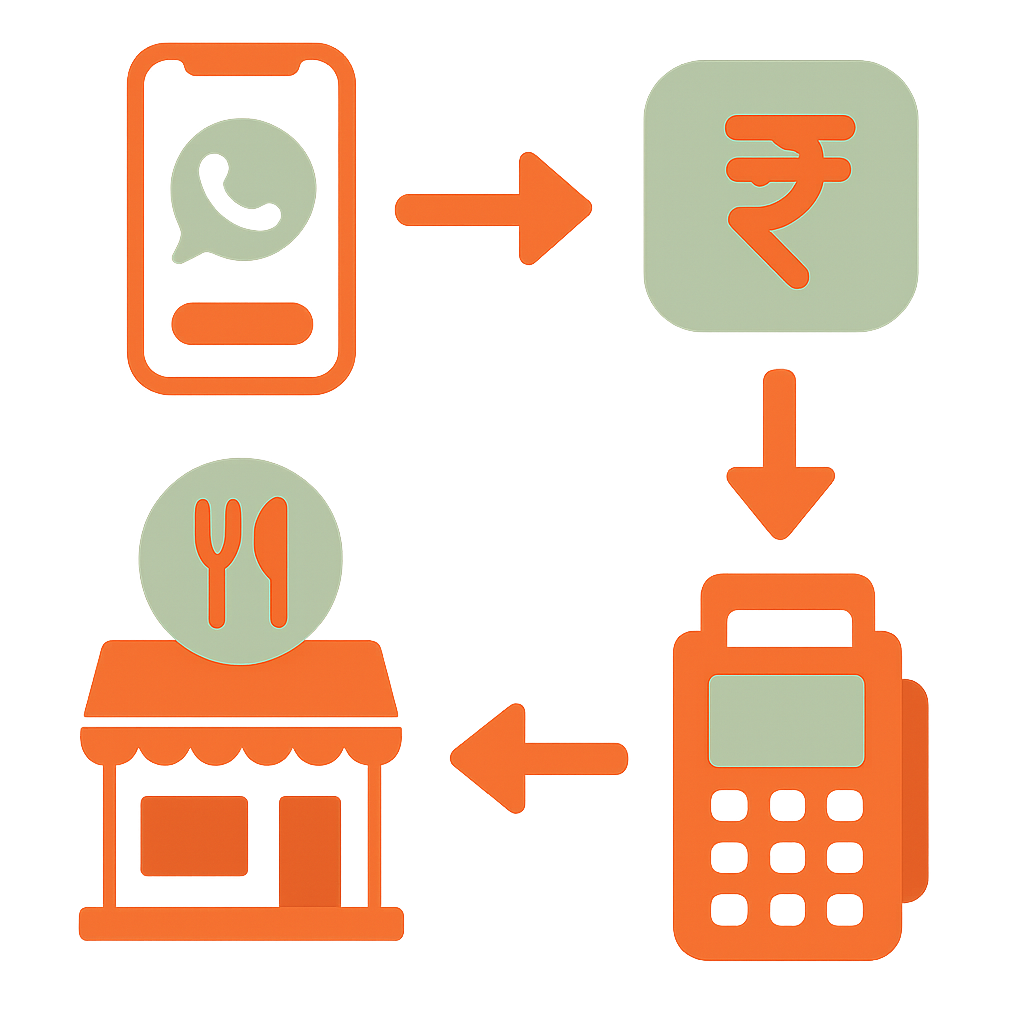
Flowchart of WhatsApp payment link integration with Indian payment gateways
How to Integrate WhatsApp Payment Links in Indian Restaurant Ordering Systems
Indian restaurants can set up WhatsApp payment links by following these practical steps:
Upgrade to WhatsApp Business API: This is essential to enable automated sharing of payment links within chats, especially for higher order volumes.
Select a mobile payment gateway: Choose one that supports dynamic payment link generation and complies with Indian regulations, such as Razorpay, Paytm, or Cashfree.
Generate dynamic payment links: Each link should be tied to a specific order and amount, ensuring accurate payments and easy reconciliation.
Embed links in WhatsApp chats: Use chatbot workflows for automatic sending or manual messaging for personalized interaction.
Test the entire flow: Verify that the payment link loads quickly on mobile devices and that payments confirm instantly, ensuring a seamless customer experience.
A Bangalore café implemented an automated WhatsApp chatbot that sends Razorpay payment links immediately after order confirmation. This automation reduced manual errors and cut the payment step time by 40%, improving order throughput.
How WhatsApp Payment Integration Improves Customer Checkout Experience in Indian Restaurants
App-native convenience: Customers complete payments within WhatsApp without switching apps or retyping information, reducing checkout friction.
Supports familiar Indian payment methods: UPI payments and popular wallets like Paytm and Google Pay are fully supported, matching customer habits.
Instant payment confirmation speeds order processing: Restaurants receive real-time updates, reducing delays.
Familiar chat interface: Customers trust WhatsApp as a communication channel, which enhances payment confidence.
Significantly lowers order abandonment rates: By simplifying payment, restaurants see higher conversion.
Survey data from multiple Delhi restaurants revealed 85% of customers prefer payment links over being redirected to external websites during WhatsApp ordering, highlighting the impact on user preference and retention.
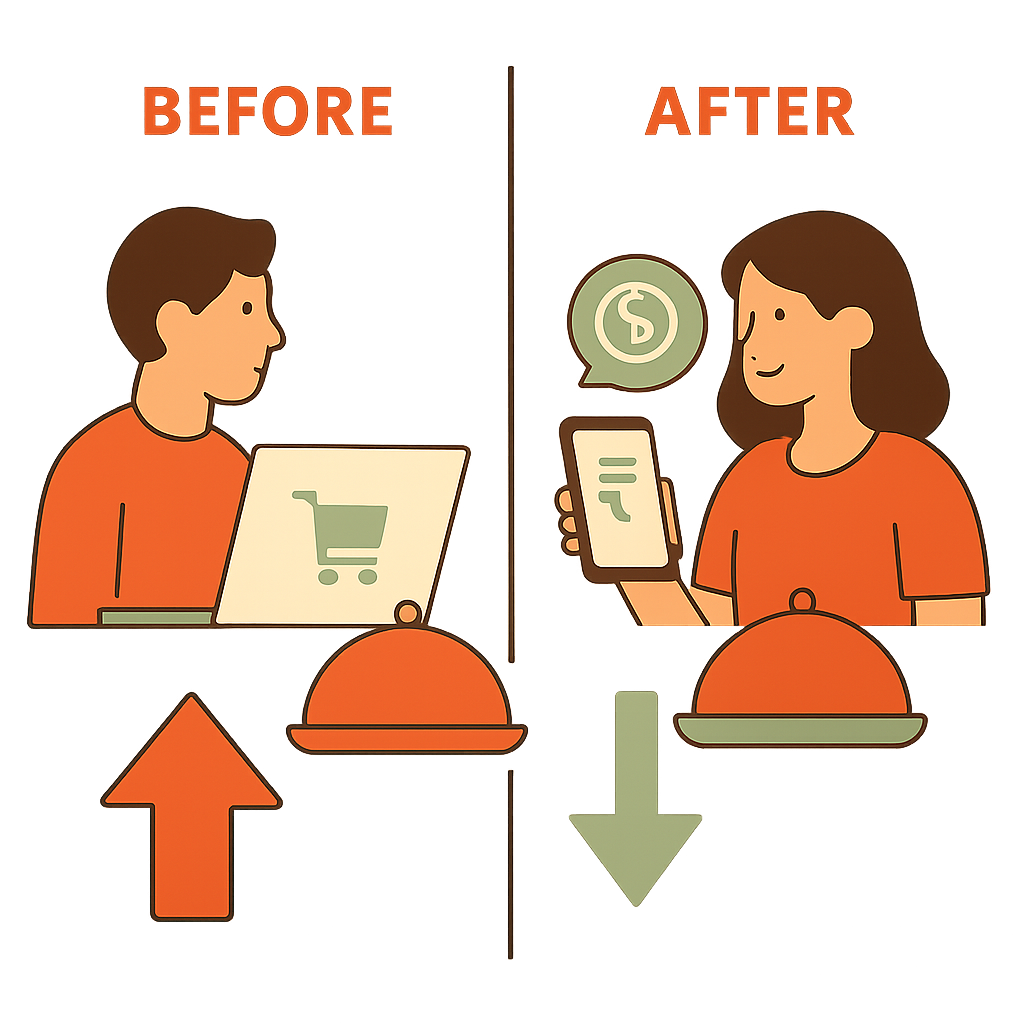
Infographic comparing order abandonment rates before and after WhatsApp payment links
Security and Compliance: Are WhatsApp Payment Links Safe for Indian Restaurants?
Security is paramount when handling online payments. WhatsApp payment links are designed with multiple layers of protection to safeguard Indian restaurants and their customers:
Links use encrypted HTTPS connections, ensuring data transmitted is secure from interception.
Integration with PCI DSS-compliant payment gateways guarantees transaction safety and adherence to global security standards.
Payments via UPI comply with NPCI guidelines, the regulatory authority for digital payments in India.
WhatsApp Business API enforces strict messaging and data privacy policies, protecting customer information during communication.
Restaurants should educate customers to recognize authentic payment links to prevent phishing attempts and fraud.
For instance, a Pune restaurant partnered with a verified payment gateway and trained staff on secure link generation, successfully avoiding payment fraud incidents over 12 months.
Top Payment Gateways Supporting WhatsApp Payment Links in India
Choosing the right payment gateway is critical for smooth WhatsApp payment integration. Here are the leading options tailored for Indian restaurants:
Razorpay: Known for seamless UPI and wallet integration, Razorpay offers easy payment link generation with real-time status updates.
Paytm: A trusted household name, Paytm supports both QR codes and payment links that work well within WhatsApp chats.
Google Pay: Leveraging UPI, Google Pay has a strong user base and integrates smoothly with WhatsApp ordering systems.
Cashfree: Provides customizable payment links and robust dashboard tools for reconciliation in restaurant operations.
CCAvenue: Offers multi-channel support including WhatsApp, with comprehensive payment options suited for large restaurant chains.
A Hyderabad restaurant reported a 25% increase in payment completion rates after switching to Razorpay payment links integrated with WhatsApp, demonstrating the impact of selecting the right gateway.
Checklist: How to Minimize Lost Sales and Reduce Order Abandonment in Indian Restaurants Using WhatsApp Payment Links
To optimize your WhatsApp payment link strategy, follow this practical checklist:
Ensure payment links are mobile-optimized and load quickly to avoid customer drop-off.
Personalize payment messages with order details (e.g., item names, amounts) to build customer trust.
Automate payment link dispatch immediately after order confirmation to maintain momentum.
Train staff to handle payment link queries and troubleshoot quickly to avoid delays.
Monitor analytics regularly to identify drop-off points and continuously improve the payment flow.
Use multi-language support to cater to India’s diverse customer base, enhancing accessibility.
A cloud kitchen chain in Chennai followed this checklist and reduced order abandonment by 40% within three months, reflecting higher sales and better customer retention.
Common Challenges and Solutions When Implementing WhatsApp Payment Links in Indian Restaurants
While the benefits are clear, Indian restaurants face some typical hurdles in adopting WhatsApp payment links:
Technical integration complexity: Legacy POS systems may not support direct link embedding. Solution: Leverage middleware SaaS platforms like BiteOrder that automate WhatsApp payment link generation.
Customer hesitancy due to phishing fears: Some customers distrust payment links. Solution: Communicate clearly about secure sources and educate customers on authentic links.
Internet connectivity issues in rural/semi-urban areas: Payment links may fail or load slowly. Solution: Offer alternative payment options alongside WhatsApp links, such as cash on delivery or UPI QR codes.
Managing multiple payment gateways and order reconciliation: Can be complicated to track payments. Solution: Use centralized dashboards that sync payment status with orders automatically.
Keeping up with evolving NPCI and RBI regulations: Compliance is critical. Solution: Partner with payment providers who stay updated on regulatory changes and ensure compliance.
A Jaipur restaurant overcame integration challenges by adopting a restaurant SaaS platform that automated WhatsApp payment link generation and reconciliation, streamlining operations without extensive IT overhead.
Frequently Asked Questions
How can WhatsApp payment links reduce order abandonment in restaurants?
By simplifying the payment process within the familiar WhatsApp chat, payment links remove friction and speed up checkout, leading to fewer abandoned orders.
What are the steps to integrate payment links in WhatsApp chats?
Set up WhatsApp Business API, select a compatible Indian payment gateway, generate dynamic payment links per order, and embed them in WhatsApp messages via chatbot or manual sending.
Is it secure to use payment links within WhatsApp for restaurant orders?
Yes, when integrated with PCI DSS-compliant gateways and using encrypted HTTPS links, WhatsApp payment links provide a secure transaction environment.
How does WhatsApp payment integration improve customer checkout experience?
It offers a seamless, app-native payment option that supports popular Indian payment methods, reducing the need to switch apps or re-enter data.
What payment gateways support WhatsApp payment links in India?
Gateways like Razorpay, Paytm, Google Pay, Cashfree, and CCAvenue are widely used for generating payment links compatible with WhatsApp.
Can WhatsApp payment links help increase sales for Indian restaurants?
Yes, by reducing checkout friction and order abandonment, these links help convert more orders into completed sales.
What are common challenges in implementing WhatsApp payment links?
Challenges include technical integration, customer trust, connectivity issues, payment reconciliation, and regulatory compliance.
For Indian restaurant owners looking to streamline payments and reduce order abandonment, platforms like BiteOrder offer tailored WhatsApp payment link integration solutions that simplify setup and enhance the customer checkout journey without complexity.